From ENFIT International Association for Supply Chain Security, Surczynski discusses critical weaknesses in food transportation, overlooked risks and the need for full standardization and digital surveillance to preserve consumer trust and product safety. The key problem lies in the fact that food safety in modern logistics systems is actually not sufficiently developed, which in a chain results in numerous risks and dangers for users.
Responsibility does not end at the factory door - The most dangerous point in the chain is the one we ignore
Video credit: ENFIT
We consume food every day, and while eating, we often do not think about the conditions under which it is produced, stored and transported to our tables. However, behind every delivery there is a supply chain whose every link must be flawlessly controlled - from production, through transportation, to storage. How secure are those links really? How is vehicle hygiene checked? Who is responsible for potential contamination during transport? What should a complex system look like that allows a safe product to reach our kitchens?
Vladimir Surčinski , vice president and executive director of the ENFIT International Association for Supply Chain Security, an organization that sets international standards in this area with a focus on understanding the critical points of food safety, talks about this increasingly topical topic for SecuritySEE.
1. Mr. Surczynski, how would you define the current challenges in supply chain security - especially when it comes to food security?
In the last ten years, and especially since the COVID-19 pandemic, we have witnessed a sharp increase in crisis situations around the world. Statistics show an increase in global crises by as much as 389%, with conflicts increasing by 150%. Such disruptions do not only affect food production itself, but seriously disrupt the continuity of safe food delivery to end users. Current wars, conflict-induced migration, as well as regular migration changes disrupt established supply flows. They bring with them increased needs for food in new environments, but also new risks for food safety, especially due to uncontrolled employment in the food industry.
In addition, global population growth will require almost twice as much food to be produced by 2050. This will lead to an accelerated expansion of production capacities, but also to greater pressure on logistics - both quantitatively and in terms of maintaining hygienic and safety conditions in transport.
In the coming years, food safety will become a key global issue. Until now, food safety has mostly been viewed through the door-to-door prism of a single production site. That approach must change. We have to include logistics, new sources of danger, and everything that happens between production and consumption.
2. What are the most common risks to food safety in modern logistics systems, and how well are organizations in the region prepared to deal with them effectively?
I have to say honestly - food safety in modern logistics systems is actually not developed enough. It is a segment that has been neglected for a long time and shaped according to the needs of users, without substantial investment in improvements.
This is why we have a whole range of risks today. In the first place - inadequate cleaning and disinfection of means of transport, especially those transporting liquid or powdered food products. This can lead to microbiological contamination. Then, there is a high risk of cross-contamination, e.g. allergen residues from the previous load.
Cases of mixing transport of human food and animal food in the same vehicles have also been recorded, which further complicates safety aspects due to different microbiological requirements.
The risks also relate to the design of the means of transport – dilapidated or improperly constructed vehicles can cause physical contamination of the product. It is often impossible to carry out proper cleaning precisely because of structural limitations.
In addition to all that, transport is also a critical point in the supply chain when we talk about intentional contamination - sabotage. During transportation, the product is beyond the manufacturer's control. Just one stop in the parking lot can be enough to cause an incident. Although plastic seals are used today as protection, their effectiveness is low, and the responsibility for their validity has been transferred to drivers. ENFIT tested 100 vehicles at 50 food manufacturers and all were rated as high risk for sabotage - 100 out of 100.
When we talk about the region, the systems are not significantly different. I could personally interpret that to mean that when the leaders are silent, the rest of the industry does nothing - unless the customer forces them to. In the end, an initiative without leadership or customer/user requirements often remains just an idea.
3. ENFIT has positioned itself as an important international organization in this field. Can you tell us more about its role, goals and operations?
Yes, ENFIT is an international association that clearly stands out from other organizations in terms of its structure and operation, as it unites all key actors in the supply chain of food, animal feed and chemicals. Our members come from all sectors - from producers of raw materials, final food products, through logistics and transport companies, operators of washing stations, equipment manufacturers, manufacturers and designers of transport units, all the way to certification and accreditation bodies, as well as representatives of specialized organizations such as HALAL and KOSHER bodies. It is this diversity of membership that allows ENFIT to look at the supply chain as a whole, without being limited to a sector or a single link in the chain.

Our work is based on the formation of interdisciplinary expert teams and specialized working groups that jointly develop practical tools, guides, methodologies and standards for improving the safety, efficiency and transparency of processes within the supply chain. One of the more significant examples is the creation of the Guide for the Protection of Critical Infrastructure in Transport and Logistics - a unique document that for the first time addresses the risks of sabotage and intentional contamination not from the perspective of the production or storage location, but from the perspective of the logistics process and transport itself. During the analysis of existing tools for evaluating Food Defense systems, we noticed that all global tools and methodologies primarily include closed systems, such as factories or warehouses. However, transport, as an open and changing system, requires a completely different approach. That is why we have developed a new methodology that enables risk assessment in transport and logistics operations, in accordance with legal requirements and standards of global certification schemes.
The goal of ENFIT is the systematic standardization of all operations that have not been covered by uniform rules so far - including the design and production of means of transport, loading and unloading procedures, hygienic washing and validation of cleanliness, sealing and securing of cargo, as well as digital traceability of all the mentioned steps.
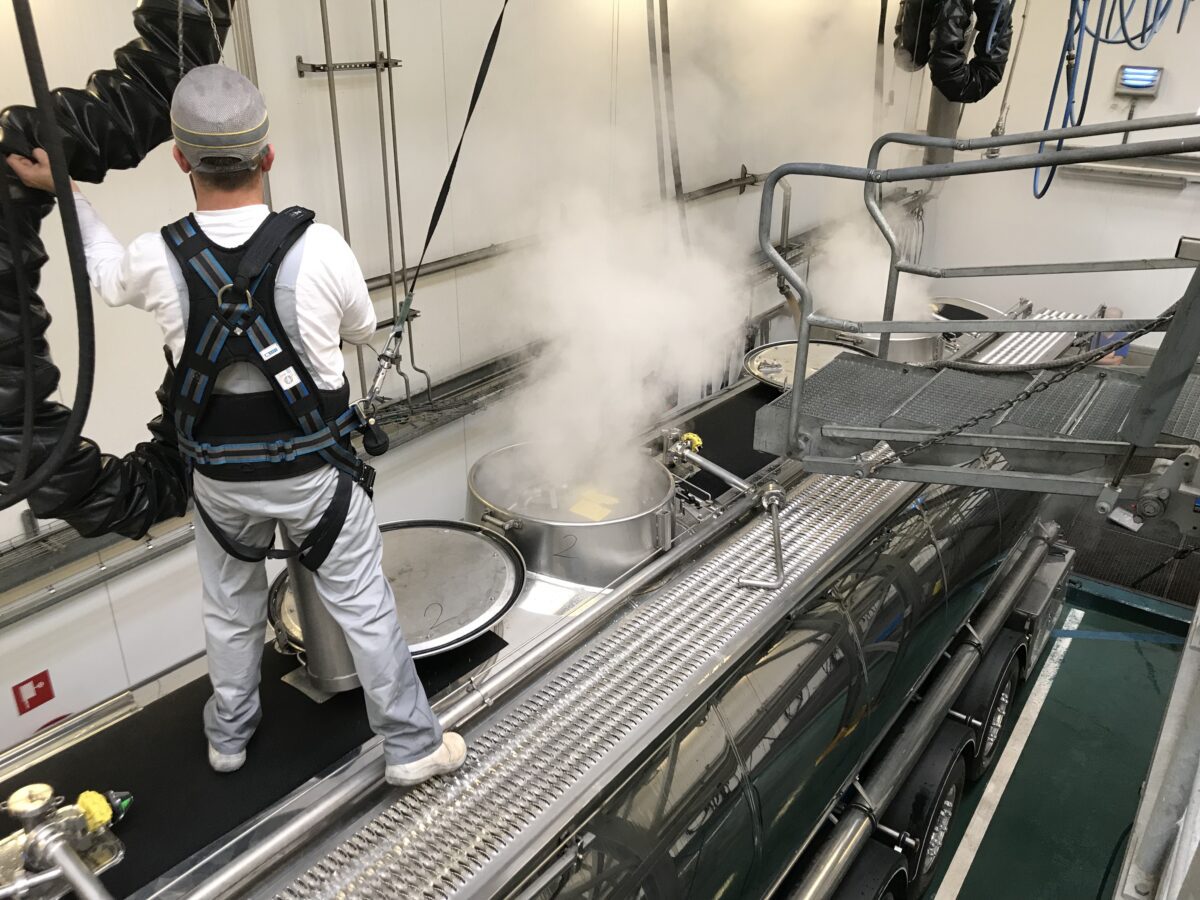
As an association with professional, scientific and industrial authority, we have developed and published the first international standard for the certification of transport unit washing stations - HQF Certification. By implementing this standard, we have made it possible for washing stations to take over a part of the responsibility in the supply chain that was until now vaguely defined or wrongly delegated exclusively to transporters. In this way, we introduce a balance of responsibility, increase transparency and improve the overall security of products in transit.
4. What standards and tools do you recommend for ensuring hygienic and operational safety in the transport of food and raw materials?
As I mentioned earlier, precisely with the aim of bringing order and consistency to one of the most critical and at the same time the most poorly regulated segments of the supply chain - ENFIT developed the HQF standard, the first international standard dedicated to the certification of washing stations for transport units that transport food, animal feed and chemicals.
There are more than 650 active washing stations on the territory of Europe, and the analysis showed that almost every one of them applies its own rules: different washing programs, different chemical agents, differences in technical equipment, as well as an uneven level of employee training. In practice, this means 650 different approaches to hygiene - which introduces serious instability into the system and opens up space for security flaws.
That is why we have developed standardized and validated washing programs that allow the processes to be repeatable, verifiable and aligned with the expected hygienic outcomes. It can be compared to household appliances - like when we select the option '65°C, 1 hour' on the dishwasher. The goal is clear: every user, anywhere in Europe, must be able to expect the same result under the same conditions.
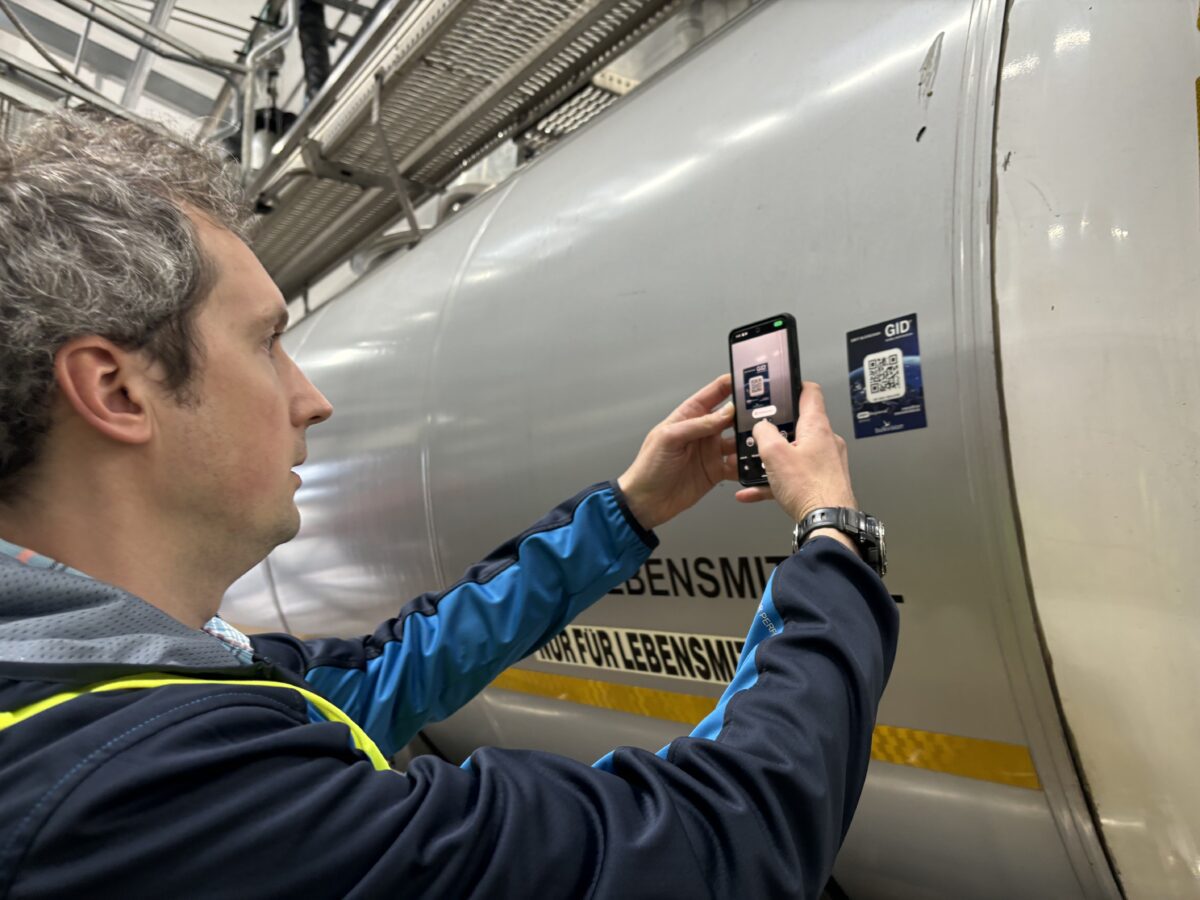
In parallel, ENFIT has developed a digital system for monitoring the safety and sealing of means of transport. This solution uses modern blockchain technology for data protection and enables the connection of digital seals with a specific vehicle, washing program, location and time of the operation. In this way, the responsibility for sealing is clearly delegated to the washing station - instead of to the driver, as was the case until now - thus reducing the possibility of human error and increasing the integrity of the entire transport process.
5. How critical are standardization and digital traceability of the supply chain to prevent incidents and maintain consumer trust?
We often take food safety for granted – both as consumers and as professionals. When buying, we check the expiration date, the declaration, but we rarely ask ourselves: "Is this safe for consumption?"
8. What are the key messages you want it to convey to participants in the supply chain – from manufacturers to end distributors?
My key message is simple: accountability does not end at the door of your manufacturing site. Food safety is not segmented by function - it is a continuous chain. Each participant, whether it is a manufacturer, transporter, distributor, washing station or warehouse owner, bears part of the responsibility for the final outcome. And the most dangerous point in the chain is the one we ignore. Today, these are often the processes of transport and washing of means of transport. If we don't standardize and digitize those points, we leave the door open for contamination. There is no more room for "presumed safety". We need provable and measurable security, in real time.
9. Finally, do you have a message for institutions, companies and the professional public when it comes to the future of food safety and transport hygiene?
My message is that we must stop treating transportation as a blind spot in food safety. Technologies exist. Methodologies have been developed. Standards are available. It's time for implementation. Institutions must recognize that transport hygiene is not a technical note, but part of critical infrastructure. Companies, especially those that operate internationally, must take the initiative and not wait for a customer or an incident to force them to change. ENFIT has the task of providing knowledge, but also to open dialogue — without taboo topics. Food safety is no longer just a technical issue of the production process – it is a matter of consumer trust, system sustainability and social responsibility of all actors in the supply chain.
Vladimir Surčinski is the CEO and Vice President of ENFIT International Association—Supply Chain Safety, where he is committed to expanding the global presence and implementation of ENFIT standards and procedures across the food supply chain industries. His mission is to enhance safety and compliance throughout the supply chain, ensuring best practices are applied universally. He is a highly experienced food safety expert with over a decade of expertise in implementing food safety practices, conducting professional training, and performing GFSI audits. His career spans global retail, food production, and certification bodies, providing him with a comprehensive understanding of industry standards and regulatory requirements. As an accredited auditor and trainer, Vladimir has conducted over 1,000 audits across various sectors and has trained more than 10,000 professionals. For over a decade, he has been a regular trainer with the International Food Safety and Quality Network (IFSQN), contributing to the advancement of food safety culture worldwide.
Who we are
Connect with us
-
Linkedin
ENFIT Academy is operated by bulkvision GmbH, Germany
in partnership with ENFIT e.V. — International Association for Supply Chain Safety.
Avenue de Broqueville 40, 1200 Brussels, Belgium · info@enfit.eu
ENFIT® is a registered non-profit association.